


Beer might seem simple when it lands cold in a pint glass, but behind every great brew is a fascinating process that blends science, tradition, creativity, and sometimes a little controlled chaos.
From ancient clay pots to modern stainless steel brewing systems, brewing beer has evolved into both an art and a craft. Whether it is happening inside a massive commercial brewery or a garage filled with bubbling buckets and curious neighbors, the goal remains the same, turning grain, water, yeast, and hops into beer.
Honestly, humanity has spent thousands of years figuring out how to make beer better, and we are still experimenting.
 What Is Brewing?
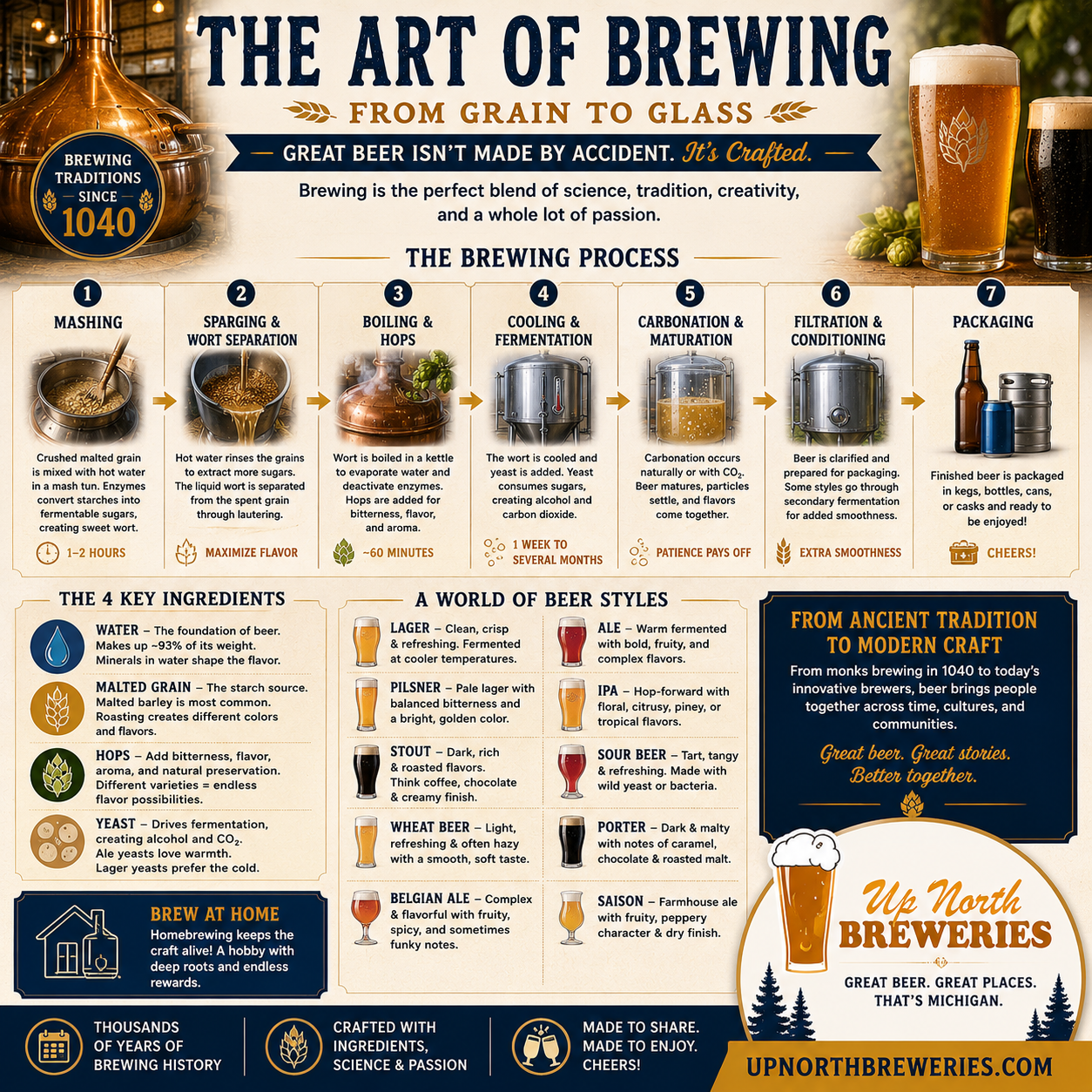
Brewing is the process of creating beer by converting starches into fermentable sugars and then transforming those sugars into alcohol through fermentation.
Beer can be produced commercially in breweries or on a smaller scale through homebrewing. Historically, homemade beer was often called farmhouse ale, especially in rural communities where brewing was part of everyday life.
At its core, brewing combines simple ingredients with carefully controlled timing, temperature, and fermentation.
And yes, sometimes brewers still stare at bubbling tanks like proud parents.
The Brewing Process Begins With Mashing
The first major step in brewing is called mashing. This process mixes crushed malted grains, usually barley, with hot water inside a vessel called a mash tun.
During mashing, natural enzymes in the malt convert starches into sugars. This sugary liquid becomes known as wort, which forms the foundation of beer.
The process generally lasts one to two hours before the liquid wort is separated from the grain.
Sparging and Wort Separation
Once the sugars are extracted, brewers rinse the grain with hot water during a process called sparging. This helps collect as much fermentable liquid as possible.
The leftover grain, called spent grain, is separated from the wort through a process known as lautering. Modern breweries sometimes use filter systems for even finer grain separation.
Some breweries even collect additional batches from the same grain, producing weaker wort for lighter beers through a method known as parti gyle brewing.
Beer brewing has a surprising amount of science hiding behind those cozy taproom vibes.
Boiling the Wort and Adding Hops
The sweet wort is then transferred into a brewing kettle, traditionally called a copper because older kettles were often made from copper.
The wort is boiled for about an hour. During this stage:
- Water evaporates
- Remaining enzymes are deactivated
- Hops are added for bitterness, flavor, and aroma
The timing of hop additions plays a huge role in flavor. Longer boiling times create more bitterness, while later additions preserve aroma and flavor.
Basically, hops are the seasoning cabinet of beer.
Fermentation, Where Beer Comes Alive
After boiling, the wort is cooled and transferred into a fermenter where yeast is added.
This is where the magic really happens.
Yeast consumes the sugars in the wort and produces alcohol and carbon dioxide during fermentation. Depending on the type of yeast and beer style, fermentation may last anywhere from a week to several months.
As fermentation continues, suspended particles settle out, gradually creating clearer beer.
And yes, brewers get weirdly excited watching airlocks bubble.
Carbonation and Packaging
During fermentation, much of the carbon dioxide escapes naturally. Brewers later add carbonation either through pressurized carbon dioxide or by adding sugar before bottling to create natural carbonation.
Once the beer is finished, it can be packaged into:
- Kegs
- Bottles
- Aluminum cans
- Casks
And then hopefully into your hand.
The Four Main Beer Ingredients
Water
Beer is made up of roughly 93 percent water. The mineral content of water can greatly influence flavor and historically helped shape regional beer styles.
Malted Grain
Malted barley is the most common brewing grain. Roasting times and temperatures help determine whether a beer becomes light and crisp or dark and rich.
Hops
Hops provide bitterness, flavor, aroma, and natural preservation. Different hop varieties can create citrusy, floral, earthy, spicy, or piney flavors.
Yeast
Yeast drives fermentation and helps determine beer style. Ale yeast and lager yeast operate at different temperatures and produce different flavor profiles.
Popular Beer Styles
Beer comes in countless styles, each with unique traditions and flavors. Some of the most recognizable include:
Lager
Clean, crisp, and refreshing beers fermented at cooler temperatures.
Ale
Warmer fermented beers that often produce bolder flavors and aromas.
Pilsner
A pale lager known for balanced bitterness and bright appearance.
Stout
Dark beers with roasted flavors often reminiscent of coffee and chocolate.
IPA
Hop forward beers ranging from fruity and citrusy to bitter and piney.
Wheat Beer
Light, refreshing beers brewed with wheat for a softer and cloudier appearance.
Sour Beer
Tart and acidic beers created with wild yeast or bacteria.
Belgian Ale
Complex beers known for fruity, spicy, and sometimes funky flavors.
Porter
Dark ales with notes of caramel, chocolate, and roasted malt.
Saison
Farmhouse ales known for fruity, spicy character and dry finishes.
Honestly, there is probably a beer style for almost everyone at this point.
Brewing Laws and Homebrewing
Throughout history, brewing beer was heavily regulated and taxed. In countries like the United Kingdom and the United States, homebrewing became more restricted during the late 19th century.
Those restrictions gradually eased during the 20th century, allowing homebrewing to grow into the popular hobby it is today.
That shift also helped fuel the modern craft beer movement we know now.
Bringing People Together
Brewing beer is part science, part tradition, and part creativity. From mashing grain and boiling wort to fermentation and packaging, every step helps shape the final beer in your glass.
Whether brewed by monks nearly 1,000 years ago or crafted in a modern Northern Michigan brewery today, beer continues bringing people together through flavor, culture, and shared experiences.
And somewhere right now, a homebrewer is nervously checking a fermenter hoping this batch does not explode in the basement.
 Marisa Fancy along with her husband and four children dreamt of moving “Up North”. They had vacationed for years in northern Michigan and in 1995 they finally made the move.