


Some of the biggest ideas in beer history started with travel, curiosity, and somebody tasting a really good lager.
That is exactly what happened when Adolphus Busch traveled through Europe in the late 1800s and discovered the famous lagers of what is now the Czech Republic. Those experiences would eventually help inspire the creation of American Budweiser, one of the most recognizable beers in the world.
It is a story that blends old world brewing tradition with American innovation, and honestly, it completely changed the direction of American beer.
 Adolphus Busch’s European Inspiration
Adolphus Busch was not content to simply brew beer the same way everyone else in America was doing it at the time.
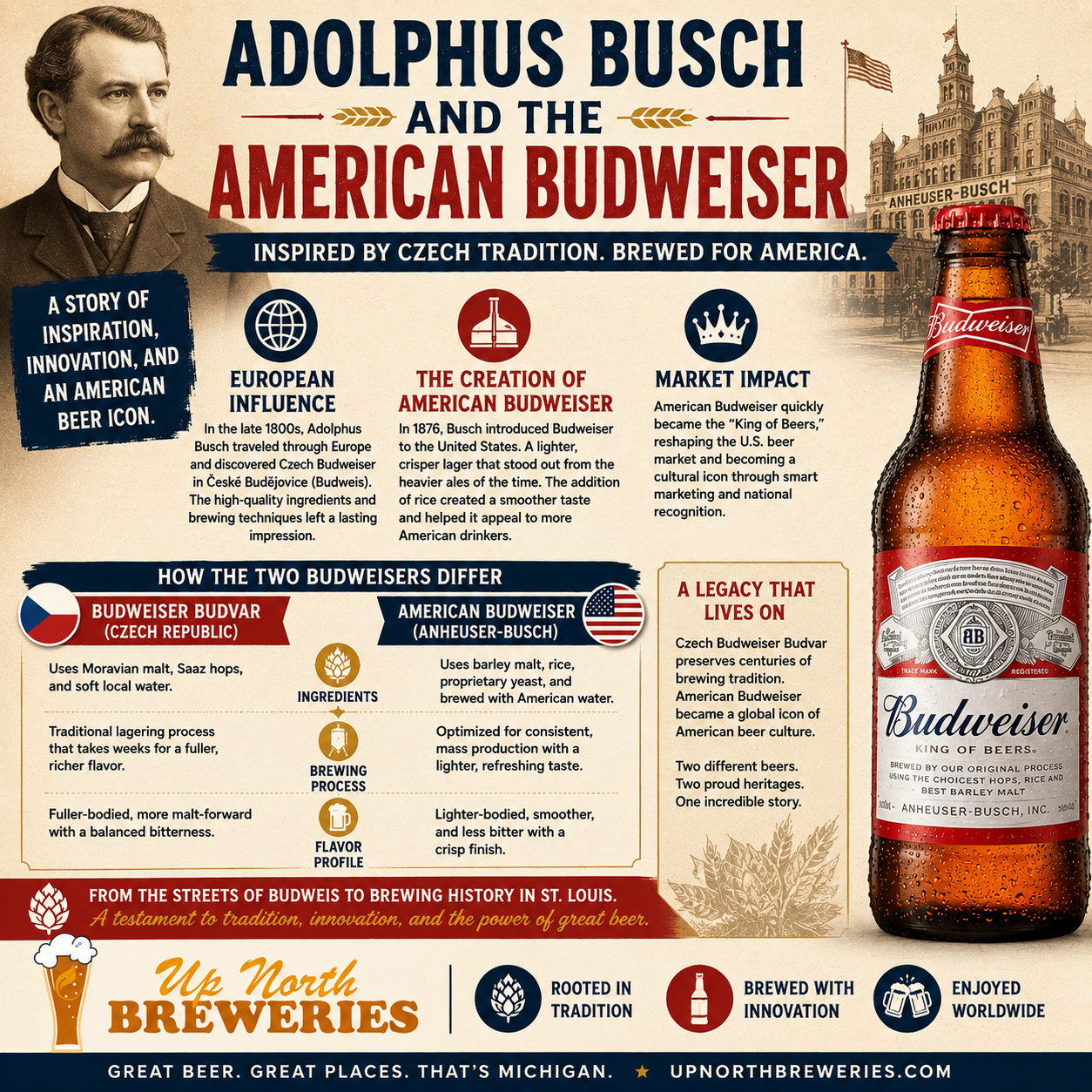
During his travels across Europe, Busch explored some of the continent’s most respected brewing regions. One beer that especially caught his attention was the Czech style Budweiser brewed in České Budějovice, also known as Budweis.
The Czech version was known for its high quality ingredients, smooth lager character, and careful brewing process. Made with Saaz hops, Moravian malt, and soft local water, it represented a brewing tradition that had developed over centuries.
Busch saw potential in adapting that style for American drinkers.
The Birth of American Budweiser
In 1876, Busch introduced Budweiser to the United States through Anheuser-Busch.
At the time, heavier ales and stouts dominated much of the American beer market. Budweiser stood out because it was lighter, crisper, and easier drinking.
One major difference was the use of rice in the brewing recipe alongside barley malt. This helped create the smoother and lighter flavor profile that eventually became a defining trait of American lagers.
It turned out Busch understood American tastes pretty well.
How the Two Budweisers Differ
Although American Budweiser drew inspiration from Czech brewing traditions, the two beers evolved into very different products.
Ingredients
Czech Budweiser, often associated with Budweiser Budvar, uses traditional ingredients including Moravian malt, Saaz hops, and soft local water.
American Budweiser includes rice in addition to barley malt, helping create a lighter body and smoother flavor.
Brewing Process
Czech Budweiser follows a traditional lagering process that takes several weeks, allowing the beer to develop a fuller and more complex taste.
American Budweiser’s brewing process was designed for consistency and large scale production while maintaining its crisp, refreshing character.
Flavor Profile
The Czech version is generally richer and more malt forward, while the American version is lighter, cleaner, and less bitter.
Basically, one feels more like an old world European lager, while the other became the ultimate American lawn mowing beer.
Budweiser Changed American Beer
American Budweiser quickly became incredibly popular.
Its approachable taste and massive marketing campaigns helped shift American beer preferences toward lighter lagers. Over time, this style became the dominant force in the U.S. beer industry.
Budweiser earned the nickname “King of Beers” and became deeply connected to American culture through sports sponsorships, advertising campaigns, and nationwide distribution.
By the 20th century, it was no longer simply inspired by a Czech beer. It had become its own global icon.
The Legacy of the Budweiser Name
Even as American Budweiser grew into a worldwide brand, the Czech brewery continued preserving its traditional brewing methods and historic identity.
That connection eventually led to the famous trademark disputes between Budweiser Budvar and Anheuser Busch over who had the rightful claim to the Budweiser name.
The legal battles added another fascinating chapter to the story of both beers, turning a brewing inspiration into one of the most famous trademark rivalries in beer history.
Tradition Meets Innovation
What makes this story so interesting is how it reflects the evolution of brewing itself.
Adolphus Busch took inspiration from centuries old European brewing traditions and adapted them for a completely different audience. That balance between tradition and innovation helped create a beer that reshaped the American beer market.
Meanwhile, Czech Budweiser remained rooted in heritage and traditional lager brewing.
Both beers survived, thrived, and built loyal followings around the world.
Different Sides
The story of Adolphus Busch and Budweiser is proof that some of the best ideas come from learning from others and putting your own spin on them.
Inspired by Czech brewing traditions, Busch created a distinctly American lager that would go on to influence beer culture for generations.
Today, both Budweisers continue to represent different sides of brewing history, one rooted in European tradition, the other built through American innovation and global reach.
And somewhere along the way, they also created one of the longest running beer arguments on the planet.
 Marisa Fancy along with her husband and four children dreamt of moving “Up North”. They had vacationed for years in northern Michigan and in 1995 they finally made the move.